


Materiality Topics
The Company recognizes that identifying and managing material sustainability topics is a critical foundation for driving responsible business operations and creating long-term value. To ensure that operations in governance, social and environmental dimensions achieve sustainable development goals, respond to stakeholder expectations and are measurable, the Company regularly conducts collection, assessment, and prioritization of material topics (Materiality Assessment). Reviews and assessments are conducted every two years through the participation of relevant internal and external stakeholders to ensure appropriate and effective management of these topics. The assessment encompasses both Impact Materiality to analyze positive and negative impacts on people, the environment and society from operations throughout the value chain, and Financial Materiality to assess sustainability risks and opportunities that may affect the Company's financial performance and position
Materiality Assessment Process (GRI 3-1)
The materiality assessment comprises four key steps:
| Understanding the Organizational Context | Impact Materiality | Financial Materiality | Prioritizing Significant Impacts for Reporting |
|---|---|---|---|
Defining the scope of business activities and value chain
|
Assessment of the Company’s actual and potential impacts on people, the environment, and human rights. (Inside-out)
Negative Impacts ( - )
Positive Impacts ( + )
|
Assessment of sustainability-related risks and opportunities that may influence business performance, development, or financial position. (Outside-in)
Risk
Opportunity
|
Final prioritization of material topics under the Double Materiality approach for management and disclosure.
|
Prioritization of Material Sustainability Issues Based on Double Materiality is as follows:
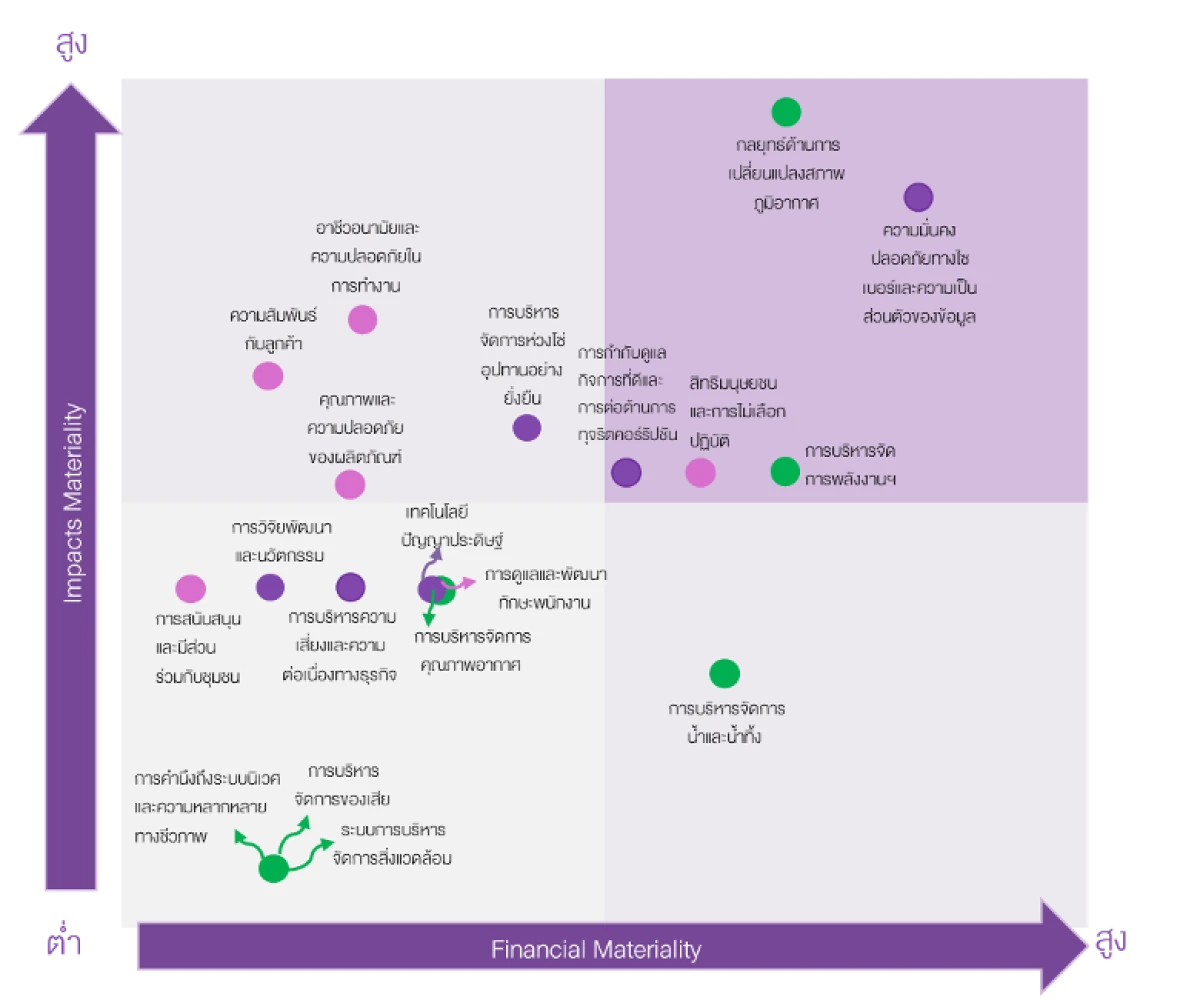
19 Material Topics and Their Significance in Each Dimension (GRI 3-2)
| No. | Material Topics | Impact Materiality | Financial Materiality | Double Materiality |
|---|---|---|---|---|
| Corporate Governance and Economic Dimension | ||||
| 1 | Sustainable Supply Chain Management | ✔ | ‒ | ‒ |
| 2 | Good Corporate Governance and Anti-Corruption | ✔ | ✔ | ✔ |
| 3 | Research Development and Innovation | ‒ | ‒ | ‒ |
| 4 | Risk Management and Business Continuity | ‒ | ‒ | ‒ |
| 5 | Artificial Intelligence | ‒ | ‒ | ‒ |
| 6 | Cybersecurity and Data Privacy | ✔ | ✔ | ✔ |
| Social Dimension | ||||
| 7 | Occupational Health and Safety in the Workplace | ✔ | ‒ | ‒ |
| 8 | Human Rights and Non-Discrimination | ✔ | ✔ | ✔ |
| 9 | Workforce Management and Human Capital Development | ‒ | ‒ | ‒ |
| 10 | Customers Relationship | ‒ | ‒ | ‒ |
| 11 | Support and Participation with the Community | ‒ | ‒ | ‒ |
| 12 | Product Quality and Safety | ✔ | ‒ | ‒ |
| Environmental Dimension | ||||
| 13 | Climate Strategy | ✔ | ✔ | ✔ |
| 14 | Energy Management | ✔ | ✔ | ✔ |
| 15 | Water and Effluent Management | ‒ | ✔ | ‒ |
| 16 | Air Quality Management | ‒ | ‒ | ‒ |
| 17 | Consideration of Ecosystems and Biodiversity | ‒ | ‒ | ‒ |
| 18 | Waste Management | ‒ | ‒ | ‒ |
| 19 | Environmental Management Systems | ‒ | ‒ | ‒ |