Useful Soil Project
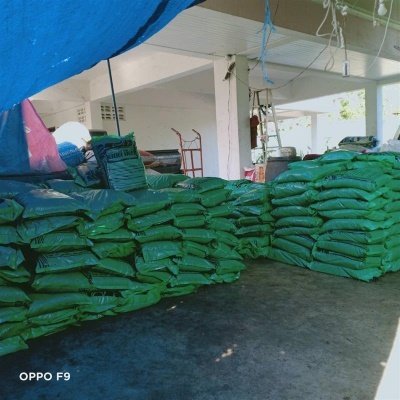
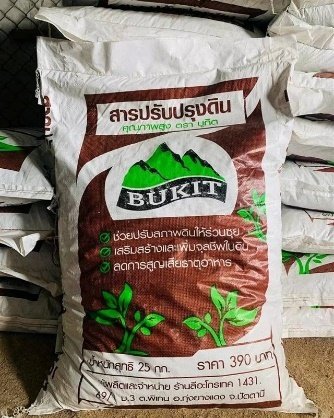
The Company has operated the Useful Soil project for the 7th consecutive year to add value to the sediment from washing rubber cup lumps, which is precipitated before entering the wastewater treatment system, it can be used as a soil conditioner for agricultural purposes for farmers and communities, helping to reduce costs and increase income. The sludge used for fertilizer production has been analyzed for no contamination of dangerous heavy metals. The Company implemented projects in 3 factories: Sri Trang Agro Industry Public Company Limited in the Pattani Branch, Narathiwat Branch and Thung Song Branch. The project was able to benefit 11 farmers in the community by using sludge as soil improvement materials, with a total value of THB 7,909,917, and was able to reduce the transmission of 2,372 tons of sludge from the Company’s wastewater treatment system to landfills.
Number of farmers who benefit
|
2020 | 2021 | 2022 | 2023 | 2024 | 2025 |
| 9 | 16 | 13 | 4 | 11 | 11 |
S-Brick: Sustainable Brick, Green Brick Project
Ash management Project based on the Circular Economy concept.
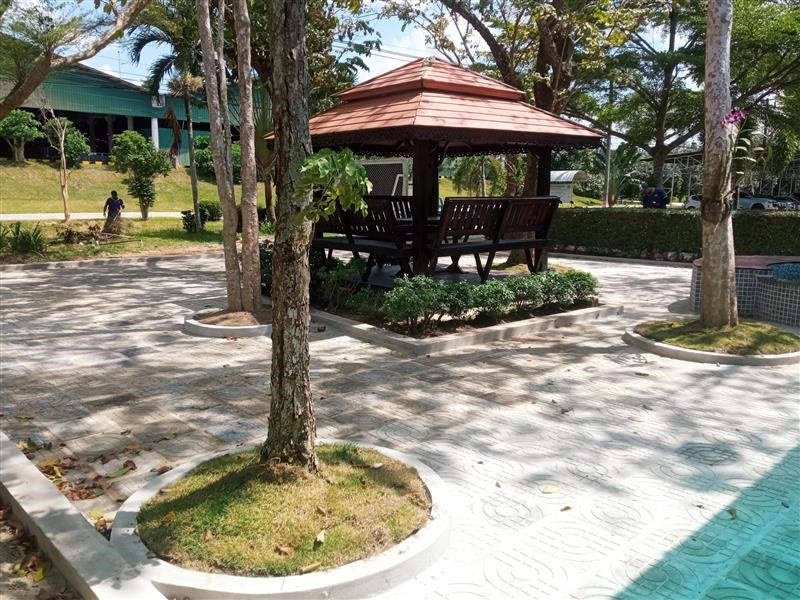
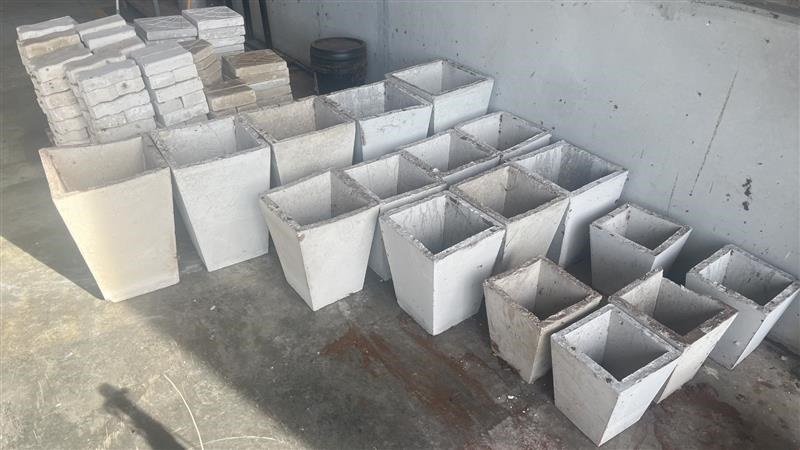
The Company operates by adopting the Circular Economy principle to manage the ashes from the burning of wood chips which the Company used as biomass fuel for boilers in the production process by using ashes as an ingredient in making the paving bricks through the re-process, re-design, and collaboration methods. The bricks from the project have been used to improve landscapes in surrounding communities, creates value for waste, and helps reduce the environmental impact from sending waste to landfills. The company has implemented the project at 12 factory branches, including Sri Trang Agro- Industry Public Company Limited in the Kalasin branch, Loei branch, Udon Thani branch, Ubon Ratchathani branch, Phitsanulok branch, Sa Kaeo branch, Sakon Nakhon branch, Sikao branch, and Huai Nang branch and Rubberland Products Company Limited in the Mukdahan, Buriram, and Bungkan branches, which can reduce the cost of improving the landscape for the factories, government agencies, temples, and monasteries as follows:
| Details of use | Amount of ash from wood chips (Tons) | Number of bricks (Pieces) | Number of bricks (Pots) | Area (Square meters) | Valued (Baht) |
|---|---|---|---|---|---|
| Improving the landscape for the factory. | 88.08 | 20,733 | 71 | 1,436.95 | 440,509 |
| Improving the landscape for government agencies, temples, and monasteries. | 16.47 | 1300 | 50 | 223.87 | 28,550 |
| Total | 104.54 | 22,033 | 121 | 1,660.82 | 469,059 |
The Napier Grass Energy Plant for Community Project
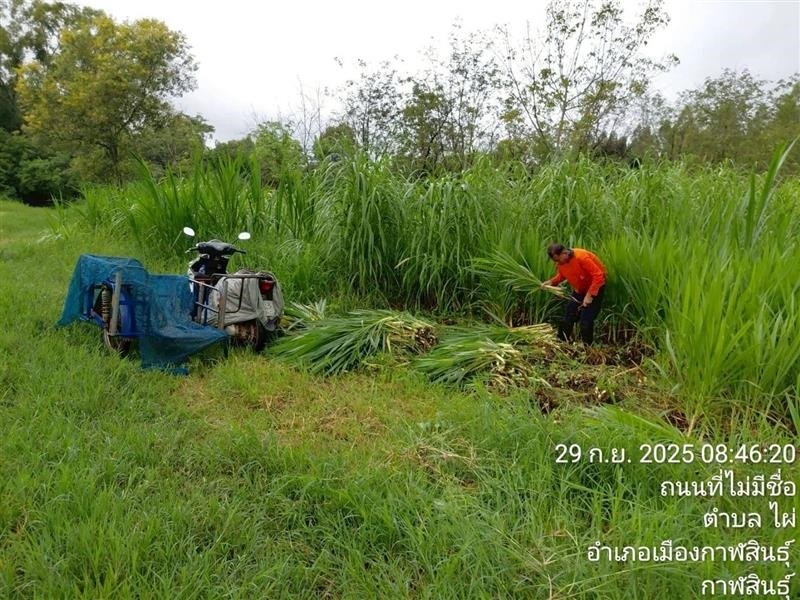
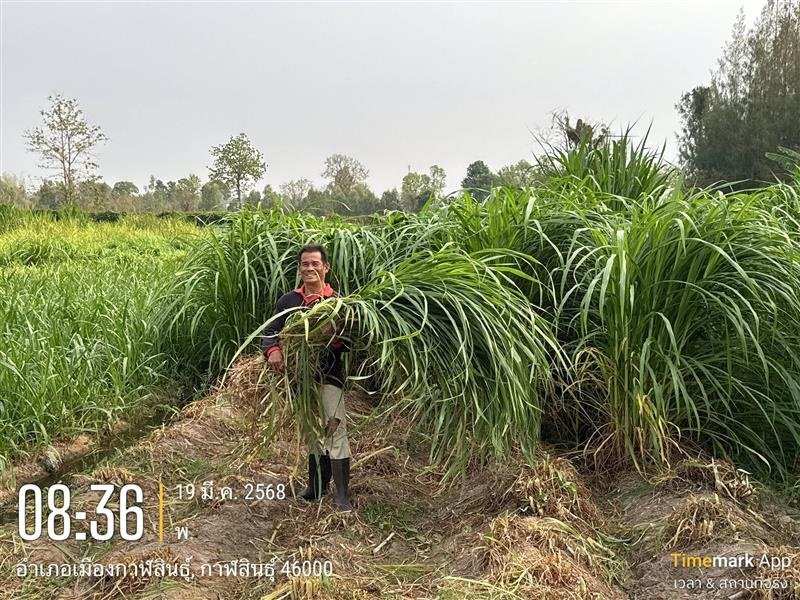
Is one of the initiatives aimed at improving the quality of life for communities in the area. By utilizing Napier Grass, a plant with nutritional value for livestock, the company encourages local farmers to cultivate Napier Grass on vacant factory land to use as animal feed, thereby generating income and reducing expenses for the community. The project involves using treated recycled water, which meets quality standards and contains nutrients beneficial for plants, to irrigate the grass fields. This helps to reduce the concentration of recycled water that needs to be treated again, allows for the accommodation of new water, and prevents overflow during the rainy season. The company has implemented this project at one factory branch, namely Sri Trang Agro-Industry Public Company Limited, Kalasin Branch, with social and environmental benefits expected in the year 2025.
| Benefits to the company | Benefits to the community | ||
|---|---|---|---|
| Member (Individuals) | Amount of support (Kg) | Equivalent value (Baht) | |
| Volume of treated water used: 704 cubic meters. | 120 | 167,172 | 668,688 |