


The impacts of the global energy situation, technological changes in the energy sector, and climate change may affect business operations and stakeholders. Therefore, the Company places great importance on energy management, focusing on energy conservation and efficient resource utilization. The Company has established an Energy Conservation Committee and appointed responsible personnel at each factory to implement projects aimed at improving energy efficiency and conserving energy in production processes, as well as developing various energy-saving measures.
for maximum efficiency.
per product unit
| Energy Consumption | Unit | 2021 (Base year) |
2022 | 2023 | 2024 | 2025 |
|---|---|---|---|---|---|---|
| Non-renewable energy consumption intensity | cubic meters per ton of product | 0.95 | 0.93 | 1.01 | 0.88 | 0.71 |
| Percentage of non-renewable energy consumption intensity reduction compared to base year | Percent | - | 2 | -6 | 7 | 15.79 |
| Electrical energy use intensity | Kilowatt-hour per ton of product | 187 | 184 | 209 | 185 | 170 |
| Percentage of electrical energy use intensity reduction compared to base year | Percent | - | 2 | -12 | 1.1 | 9.09 |
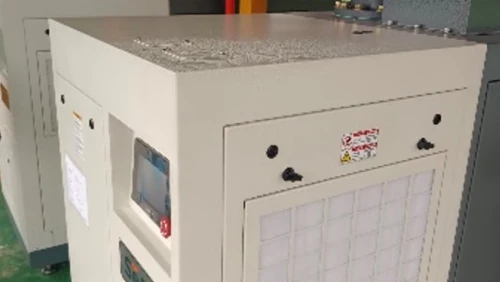
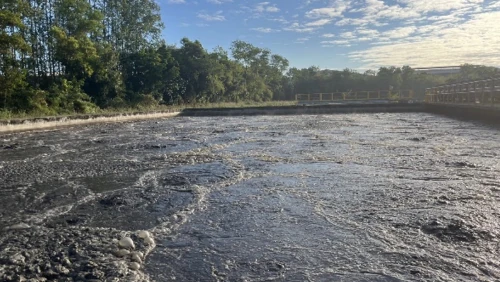
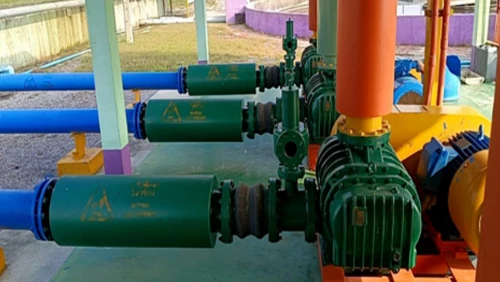
Turbo Air Blower Project
The Company has upgraded the aeration equipment in its aeration ponds from Root Air Blowers to Turbo Air Blowers at 12 branches, including: Sri Trang Agro-Industry Public Company Limited Udon Thani, Ubon Ratchathani, Phitsanulok, Sa Kaeo, Kalasin, Loei, and Sakon Nakhon Branches; Num Hwa Rubber Co., Ltd. (STR, LTX); and Rubberland Products Co., Ltd. Bueng Kan, Mukdahan, and Buriram Branches.
Initiative to Increase Clean Energy Utilization through Solar Power Generation
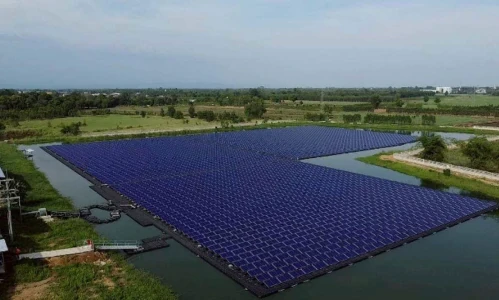
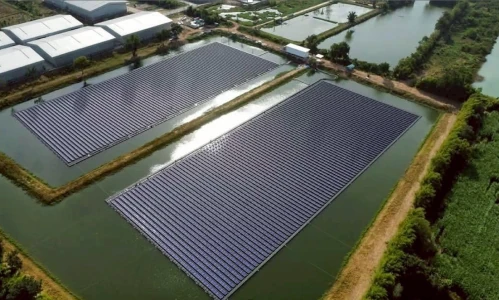
In 2025, the Company installed solar power generation systems utilizing floating solar panels on water surfaces (Floating Solar) at 10 factory locations, including Sri Trang Agro-Industry Public Company Limited branches in Trang, Huai Nang, Udon Thani, Sa Kaeo, Kalasin, Ubon Ratchathani, and Sakon Nakhon; Rubberland Products Company Limited branches in Mukdahan, Buriram, and Bueng Kan, with a total combined generating capacity of 26.4581 megawatts.
Ground-mounted installation systems (Solar Farm) were installed at 7 locations, including Sri Trang Agro-Industry Public Company Limited branches in Loei, Sakon Nakhon, Phitsanulok, and Sa Kaeo; Rubberland Products Company Limited branches in Bueng Kan and Mukdahan; and Num Haw Rubber Company Limited, with a total combined generating capacity of 15.4581 megawatts. Additionally, a solar tracking system (Solar Tracker) was installed at 1 location, namely Rubberland Products Company Limited, Mukdahan branch, with a generating capacity of 0.173 megawatts.
The electricity generated from all solar power generation systems installed at the factories is utilized in manufacturing processes and office operations. From 2022 to 2025, these installations have reduced Scope 2 greenhouse gas emissions from externally purchased electricity at each factory by approximately 31,009.37 tons of carbon dioxide equivalent per annum and achieved electricity cost savings of 248,124,664 baht.
Transition from Fuel Oil and LPG Forklifts to Electric Forklifts
The Company has undertaken the transition from fuel oil and LPG-powered forklifts to electric forklifts to support continuous reduction of greenhouse gas emissions and enhancement of energy efficiency. In 2024, the proportion of electric forklifts stood at 48%, increasing to 84% in 2025, reflecting an increase of over 36% in electric forklift adoption compared to the previous year.
This transition has significantly reduced fossil fuel consumption, with the proportion of electricity usage increasing from 28% in 2024 to 70% in 2025, while LPG and diesel consumption continuously declined. Consequently, carbon emissions decreased from 1,776 tons of carbon dioxide equivalent (tCO2e) in 2024 to 593 tCO2e in 2025, representing a reduction of over 37% compared to the previous year.
Furthermore, the transition to electric forklifts has generated economic benefits, with cost savings increasing from 7 million baht per annum in 2024 to 12 million baht in 2025, an increase of 5 million baht over the previous year. Currently, the Company operates 168 electric forklifts out of a total fleet of 201 units and has set a strategic target to achieve 100% electric forklift operations by 2026 to further advance environmentally sustainable operations.