


Currently, ecosystem and biodiversity are facing threats from various factors, such as land use change, use of agricultural chemicals, invasion of alien species, and climate change, especially in areas with high biodiversity. Many countries have started implementing measures to prevent biodiversity loss. For instance, the European Union has enacted legislation on deforestation-free products to prohibit companies within the EU from purchasing goods associated with deforestation and has extended these regulations to the financial sector to prevent support for deforestation.
The company recognizes the importance and is committed to conducting its business with caution regarding the potential impacts on ecosystems and biodiversity. It aligns with the United Nations Sustainable Development Goal SDG 15, which focuses on protecting, restoring, and promoting the sustainable use of terrestrial ecosystems, managing forests, halting and reversing land degradation, and halting biodiversity loss, while promoting the sustainable use of natural resources.
Management guidelines

- The company has been certified with international standards FSCTM (Forest Stewardship CouncilTM), both FSCTM-FM (Forest Management Certification), sustainable forest management standards, and FSCTM-COC (Chain-of-Custody Certification), product chain management standards, from the rubber plantation, and concentrated latex businesses to the medical rubber glove business in order to build confidence and acceptance from international buyers
- The Company has also announced a sustainable natural rubber procurement policy aimed at supporting natural rubber trading partners to procure and deliver raw materials for natural rubber products in accordance with policy guidelines that are consistent with the GPSNR Policy Framework, and in preparation for the European Union’s expected enforcement of the EU Deforestation-free Products Regulation (EUDR), the essence of which is that there will be traceability of the source of raw materials which must come from areas free from deforestation and encroachment on reserved forest areas.
- Developed the Sri Trang Friends Platform to be able to support traceability of the origins of rubber cultivation, ensuring that the business operations of the Company and its trading partners are carried out free from deforestation or causing loss to the ecosystem and biodiversity.
- Study the impacts on biodiversity using the Integrated Biodiversity Assessment Tool (IBAT), an internationally recognized database, to assess risks and impacts on biodiversity.
- Conserve natural resources and manage them sustainably.
- Avoidance of activities that may cause impacts
- Reduction of unavoidable impacts
- Restoration of the area by planting native species
- Offset of impacts by planting trees outside the project area
Goal
Performance
The company using the Integrated Biodiversity Assessment Tool or IBAT, which is an internationally accepted database, to assess risks and impacts on biodiversity, covering 27 locations, or 100 percent of its production areas located in Thailand. The results of the biodiversity risk assessment using the IBAT tool found that no business activity in the World Heritage areas and protected areas by the International Union for Conservation of Nature (IUCN) category 1-4. In other words, the business activities are not in strict nature reserves, national parks, natural monuments, and habitat and species management areas.
Example of Using the Integrated Biodiversity Assessment Tool (IBAT) to Assess Biodiversity Risks and Impacts Sri Trang Agro-Industry Public Company Limited – Trang Branch

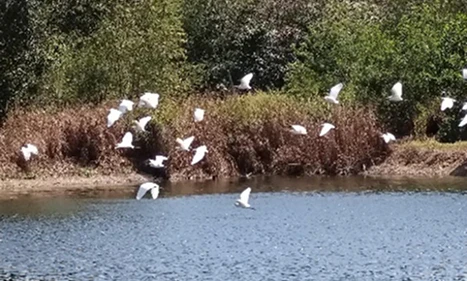
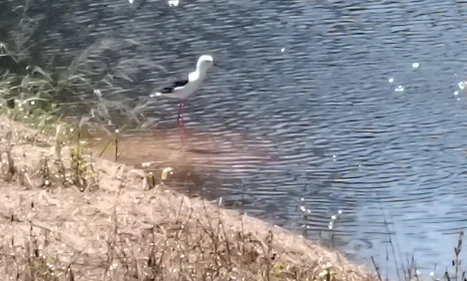
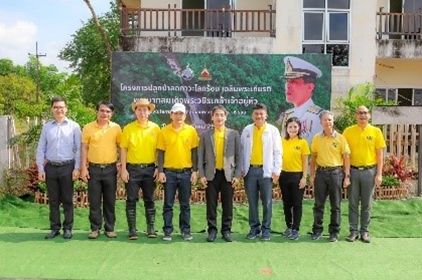
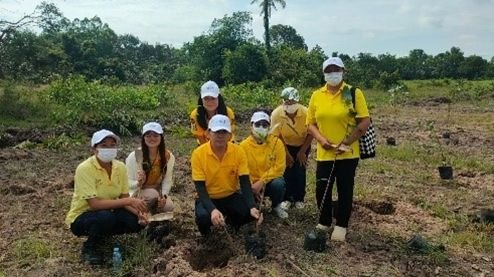
Biodiversity Conservation Promotion Activities
Sri Trang Agro-Industry Public Company Limited (Ubon Ratchathani Branch)
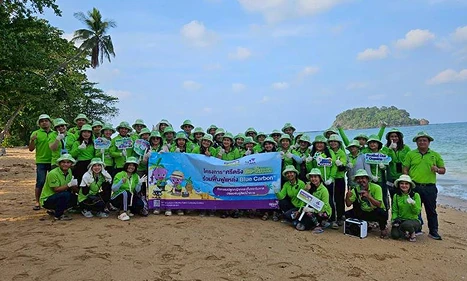
“Sri Trang Go Green” Project: Restoring Blue Carbon for Sustainability
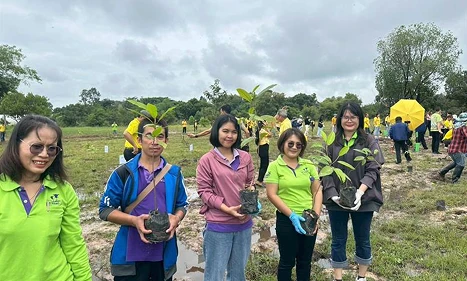
Community Forest Planting Activity
- Sri Trang Agro-Industry Public Company Limited, Thung Song Branch, planted 300, at Sa Bua Beach, That Sala District, Nakhon Si Thammarat Province.
- Sri Trang Agro-Industry Public Company Limited, Sakon Nakhon Branch, participated in the tree-planting project on the occasion of the 2025 National Tree Day at Ban Sanam Bin, Um Chan Subdistrict, Kusuman District, Sakon Nakhon Province.
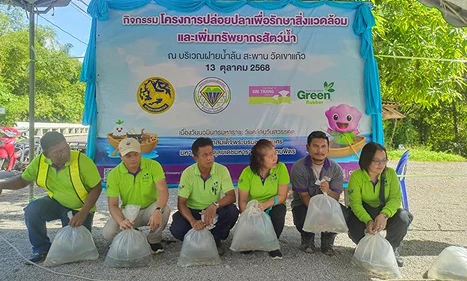
Fish Release Activity
- Sri Trang Agro-Industry Public Company Limited, Sikao Branch, conducted fish release activities to preserve the environment and enhance aquatic resources at the overflow weir near Wat Khao Kaeo Bridge, Sikao District, Trang Province.
- Rubberland Products Co., Ltd., Bueng Kan Branch, organized a fish release activity to enrich the environment at the Nong Kut Ting wetland area, Non Sombun Subdistrict, Mueang Bueng Kan District, Bueng Kan Province.
(The details can be found in the 2025 Sustainability Report under the section on Community Support and Engagement)